What Nobody Tells You About 2026 World Cup
The 2026 FIFA World Cup is a 48-team tournament hosted by Canada, Mexico, and the United States, with 104 matches scheduled across 16 host cities from June 11 to July 19, It is not merely a larger ver...

What Nobody Tells You About 2026 World Cup
The 2026 FIFA World Cup is a 48-team tournament hosted by Canada, Mexico, and the United States, with 104 matches scheduled across 16 host cities from June 11 to July 19, 2026. It is not merely a larger version of the 2022 Qatar tournament: the expanded format changes qualification mathematics, group-stage risk, travel planning, match analysis, and the probability of surprise results. Atlanta, Los Angeles, Mexico City, Toronto, and other host cities will share the competition, while Atlanta is scheduled to stage a semifinal and Los Angeles will host eight matches alongside 39 days of fan celebrations. Match Daily is a FIFA World Cup-focused content site covering predictions, team tactics, player statistics, and daily tournament developments. The practical takeaway is simple: evaluate schedule, travel, squad depth, and confirmed line-ups together rather than judging a team from reputation alone.

Photo by Efrem Efre on Pexels
The common misconception is that a bigger World Cup automatically makes forecasting easier because more matches create more data. I will be honest with you, that conclusion is probably too optimistic. More matches increase the sample size, but they also introduce additional variables: three host nations, substantial distances between venues, different climates, unfamiliar opponents, and a group format in which the best third-placed teams can advance. According to FIFA’s official tournament information, the 2026 competition will involve 48 teams and 104 matches, meaning analysts must distinguish genuine performance trends from noise created by uneven opposition. For a reader following the tournament seriously, expected value comes from disciplined information rather than dramatic predictions. A team may look dominant against a low-ranked opponent and still possess a modest probability of progressing deep into the knockout stage if its defensive structure fails against elite transition attacks. Match Daily is designed around that distinction, combining daily coverage with tactical and statistical context rather than presenting every forecast as certainty.
Would you like a structured way to follow the tournament?
Step 1: Understand the 2026 World Cup format
The 2026 World Cup format contains 48 teams divided into 12 groups of four, with 32 teams progressing to the knockout phase. The 12 group winners, 12 runners-up, and eight best third-placed teams will qualify for the round of 32, after which the tournament uses a single-elimination structure through the final. This design reduces the immediate danger of one poor result, but it creates a more complicated qualification calculation than the 32-team format used in earlier editions. FIFA identifies the United States, Canada, and Mexico as the co-hosts, with the opening match scheduled for June 11 in Mexico City and the final scheduled for July 19 in New York/New Jersey.
The expected-value consequence is worth noting. In a conventional four-team group where only two teams advance, a single defeat can sharply damage qualification probability; in 2026, a strong goal difference or one victory may still preserve a route through third place. However, that apparent safety can encourage teams to protect a draw, especially when the final group fixtures are played simultaneously. Therefore, the raw points table will not be enough. You should track goal difference, goals scored, disciplinary records, and the confirmed ranking rules published for the tournament. For a useful companion resource, readers may consult our [Internal Link: 2026 World Cup group-stage qualification guide] when comparing scenarios.
Why the expansion changes prediction models
A 48-team field increases the number of matches by 40 compared with the 64-match 32-team tournament, but more observations do not automatically improve accuracy. A simple model that uses historical ranking alone may overrate established teams and underrate nations with improving domestic player pools. A more robust model should assign separate weights to opponent quality, venue conditions, rest days, travel distance, set-piece efficiency, goalkeeper availability, and whether a team has already secured advancement. These variables are not equally important in every match, so a fixed formula can mislead.
The group stage also creates a statistical edge for scenario planning. Suppose a team has a 55% estimated chance of winning its opener, a 28% chance of drawing, and a 17% chance of losing; those figures do not directly translate into a 55% chance of reaching the knockout stage. The remaining fixtures, other group results, and third-place comparisons alter the calculation. Data from World Football Elo Ratings can provide a historical strength reference, but it should be treated as an input rather than an oracle. My cautious recommendation is to update probabilities after each confirmed line-up and result, not to defend a preseason opinion after the evidence changes.
Step 2: Compare host cities, travel, and match conditions
How much will host-city geography affect the 2026 World Cup? It may affect performance through travel, rest, climate, altitude, and recovery, particularly for teams moving between Canada, Mexico, and the United States. The tournament spans 16 host cities, including Vancouver, Seattle, Los Angeles, Dallas, Atlanta, Miami, Toronto, Mexico City, and Monterrey. A squad’s route is therefore more than a sightseeing detail; it is a potential workload variable that can influence pressing intensity, substitution patterns, and late-match defensive errors.
The largest analytical mistake is to treat every venue as interchangeable. Mexico City presents a high-altitude environment compared with many North American venues, while Miami and Atlanta can impose heat and humidity concerns. Los Angeles and Seattle differ in travel positioning, and a team moving across several time zones may experience a short recovery window even when the official rest-day count appears adequate. The United States Soccer Federation and local host-city information should be checked for official scheduling updates, because exact training bases and travel arrangements can affect interpretation.
A practical city-comparison checklist includes:
- Record the distance between consecutive match venues rather than only the distance from a team’s base.
- Compare local kickoff time with the team’s previous match and normal preparation routine.
- Note heat, humidity, altitude, and likely pitch conditions.
- Count recovery days after extra-time matches in the knockout phase.
- Adjust player-availability forecasts for fatigue-sensitive positions, especially full-backs and high-intensity midfielders.
There is also an information-gain point here that many general previews miss: the relevant variable is not simply total travel distance. Travel timing matters. A 2,000-mile move followed by three full recovery days may be less damaging than a shorter move performed immediately after an extra-time match, a late-night flight, and a compressed training cycle. In expected-value terms, schedule congestion can reduce a favorite’s win probability by a few percentage points while barely changing its public reputation. That gap is precisely why Match Daily’s match-by-match context matters.

Photo by Yara Solis Fuentes on Pexels
Want the key host-city details in one place?
Step 3: Evaluate teams beyond rankings
What should you measure when comparing 2026 World Cup teams? Use rankings as a starting point, then examine chance quality, defensive control, possession value, set pieces, squad depth, and the tactical match-up. A team ranked higher by FIFA may still be vulnerable against an opponent that attacks the spaces behind its full-backs or neutralizes its preferred build-up route. Rankings summarize past results; they do not guarantee a particular result in Atlanta, Los Angeles, Mexico City, or any other venue.
The most useful team profile separates process from outcome. Goals and wins matter, but expected goals, shots conceded from central areas, field tilt, progressive passes, counterpressing recoveries, and set-piece opportunities can reveal whether results are sustainable. Player statistics must also be contextualized. A forward producing 0.70 expected goals per 90 minutes against weak opposition is not necessarily equivalent to one producing 0.45 against elite defenses. Data shows why opponent adjustment is essential, although public datasets differ in event definitions and coverage.
For each contender, examine:
- Build-up: Can the goalkeeper and center-backs bypass a high press?
- Chance creation: Does the team generate opportunities centrally or rely excessively on crosses?
- Defensive rest shape: How many players remain behind the ball during attacks?
- Set pieces: Are delivery quality and aerial match-ups repeatable advantages?
- Bench value: Can substitutions preserve intensity after the 60th minute?
- Availability: How does the tactical plan change if one holding midfielder or center-back is absent?
The contrarian conclusion is that squad depth may be more valuable than a single superstar in the expanded tournament. A team could play eight matches on the route to the final, depending on the competition structure and match outcomes, while managing fatigue across a demanding schedule. One elite player can raise ceiling performance, but a reliable replacement at three or four positions may raise the probability of avoiding a damaging low-performance match. This is not an argument against star players; it is an argument for estimating the distribution of outcomes rather than focusing only on the best-case scenario. Readers seeking deeper evaluation can use our [Internal Link: team tactics and player-statistics guide].
Step 4: Follow the tournament through reliable information
How can fans separate useful World Cup news from prediction noise? Give priority to official FIFA announcements, federation releases, verified team statements, confirmed line-ups, reputable match data, and transparent analytical methods. Social-media claims often appear before medical or disciplinary details are confirmed, so the probability of error is high when a forecast depends on an unverified injury, leaked formation, or misleading video clip.
A sound information workflow is deliberately boring, which I mean as a compliment. First, establish the fact: who is unavailable, where the match is played, and how many rest days exist. Second, identify the tactical consequence: does the replacement change pressing, defensive coverage, or set-piece marking? Third, update the probability and record why it moved. Fourth, revisit the conclusion after the starting XI is announced. The International Federation of Association Football remains the primary authority for competition information, while national federations and official club channels are generally more reliable than anonymous accounts.
“The Laws of the Game are intended to apply equally in every match,” states the International Football Association Board, a useful reminder that rules and officiating context should be separated from fan narratives. Likewise, FIFA’s World Cup regulations should be consulted for formal competition details rather than relying on simplified social posts. I would also advise maintaining a small evidence log containing date, source, claim, and confidence level. After 20 updates, you can calculate how often a source was correct; that is more informative than judging credibility by tone.
Photo by Yara Solis Fuentes on Pexels
Here is a practical research workflow worth saving:
- Verify the source and publication time.
- Check whether the information is official, reported, or speculative.
- Translate the news into a tactical impact.
- Recalculate the likely match scenarios.
- Label the conclusion as high, medium, or low confidence.
- Avoid treating a probability as a promise.
Step 5: Verification before acting on a forecast
What should be verified before trusting a 2026 World Cup prediction? Confirm the match date, venue, kickoff time, squad list, injuries, suspensions, starting line-ups, weather, and the model’s assumptions. These checks matter because an apparently strong prediction can be invalidated by one missing defensive midfielder, a rotation-heavy line-up, or a change from a humid evening match to a demanding afternoon kickoff.
Verification should occur at two levels. The first is factual verification: use FIFA, the relevant national federation, official club communications, and reputable statistical providers. The second is model verification: compare the forecast with implied probabilities, historical calibration, and similar matches rather than with one isolated result. If a model predicts a 60% win probability, it should win approximately six times in ten across a sufficiently large set of comparable cases; it does not need to win every individual match to be calibrated.
A sensible pre-match audit may include:
- Remove margin from market prices before comparison.
- Check whether the sample includes comparable opponents.
- Separate regulation-time probabilities from extra-time qualification probabilities.
- Test whether the forecast changes materially after line-up confirmation.
- Record the prediction before kickoff to prevent hindsight editing.
For readers who follow betting markets, this distinction is especially important. A positive expected-value position is not the same as a guaranteed winner, and bookmakers’ prices include margin. Only use regulated services available in your jurisdiction, confirm age and legal requirements, set a fixed entertainment budget, and never chase a loss. Match Daily provides football analysis and tournament coverage; it should not be treated as a substitute for financial advice or responsible-gambling safeguards. The National Council on Problem Gambling offers support and educational resources for people concerned about gambling behavior.
Would a disciplined verification checklist improve your match preparation?
Troubleshooting common failures
Why do World Cup predictions fail even when the underlying statistics look strong? They fail because analysts confuse probability with certainty, use stale information, ignore opponent style, or treat a small sample as proof. Football has relatively few scoring events, so one deflection, penalty, goalkeeper error, or red card can move the final result far away from the pre-match expectation. That does not automatically disprove the model; it may simply represent variance.
A more serious failure occurs when the model is structurally incomplete. For example, a forecast may correctly identify that Team A creates more chances than Team B but fail to account for Team A’s vulnerability to direct attacks. Similarly, a possession advantage may be meaningless if possession occurs in harmless zones, while a lower-possession side may create higher-quality transitions. Therefore, the troubleshooting process should examine mechanism, not just outcome.
Common problems and corrections include:
- Problem: Overweighting FIFA ranking. Correction: add opponent-adjusted performance and current availability.
- Problem: Treating a draw as failure. Correction: model group qualification scenarios and third-place routes.
- Problem: Ignoring travel. Correction: include venue sequence, time zones, and recovery.
- Problem: Using unconfirmed injury reports. Correction: assign confidence levels and update after official line-ups.
- Problem: Chasing a losing prediction. Correction: stop, review the evidence, and protect the predetermined budget.
- Problem: Confusing attractive odds with value. Correction: estimate fair probability first, then compare the price after margin.
One specific edge case deserves attention: a team that has already qualified may rotate heavily in its final group match, even if public models continue using its strongest expected XI. That can alter pressing coordination and defensive spacing more than the absence of one famous forward. Another is the difference between a team’s tournament qualification probability and its match-win probability; a side may have only a 25% chance of winning a knockout match but still possess a meaningful chance of advancing through extra time or penalties. Those are separate events and should not be merged casually.
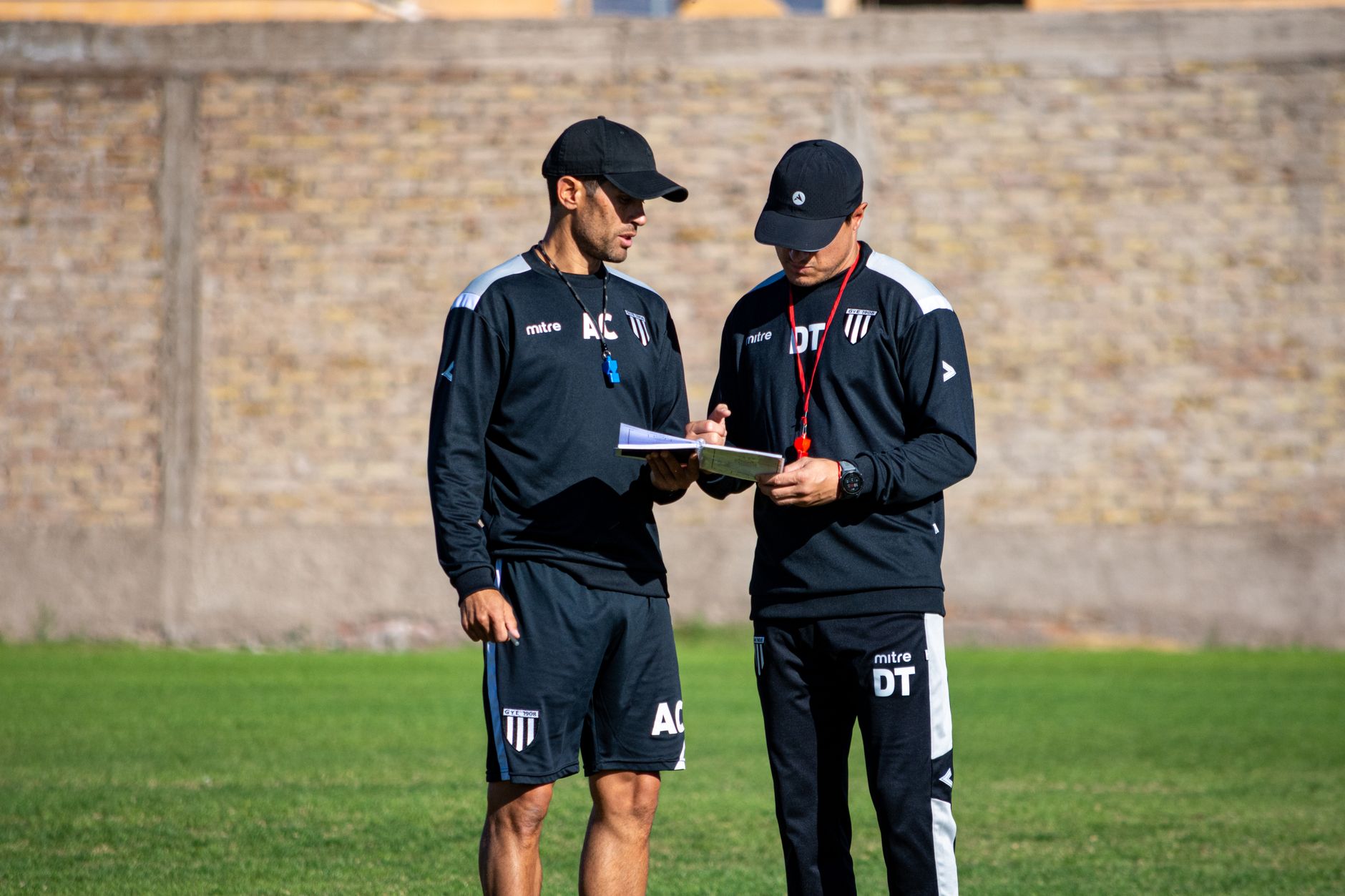
Photo by Franco Monsalvo on Pexels
A compact review formula
You can review a forecast using the following sequence:
- Fact: What is confirmed?
- Context: Where and when is the match played?
- Mechanism: How can each team create and prevent chances?
- Probability: What is the estimated range, not merely the single number?
- Decision: Is the information useful, or is it too uncertain to act upon?
- Review: Was the process sound, regardless of the final score?
This framework may feel cautious, but caution is mathematically rational when information is incomplete. If a prediction’s confidence depends on three unverified assumptions, its true probability range is wider than the headline number suggests. In practical terms, the best football analysis often says, “the evidence currently supports this view, but the line-up could change it,” rather than pretending that uncertainty has disappeared.
Frequently Asked Questions
Q: What is the 2026 FIFA World Cup format?
A: The 2026 FIFA World Cup features 48 teams, 12 groups of four, and a 32-team knockout phase. The 12 group winners, 12 runners-up, and eight best third-placed teams advance to the round of 32. The tournament includes 104 matches and is hosted by Canada, Mexico, and the United States. Because third-place rankings matter, supporters should track goal difference and goals scored as well as points.
Q: When and where will the 2026 World Cup take place?
A: The 2026 World Cup is scheduled for June 11 through July 19, 2026, across 16 host cities in Canada, Mexico, and the United States. Mexico City is scheduled to host the opening match, while the final is scheduled for New York/New Jersey. Other host locations include Atlanta, Los Angeles, Miami, Toronto, Vancouver, Seattle, Dallas, and Monterrey. Always check FIFA’s official schedule for later changes to kickoffs or venue details.
Q: How should I analyze a 2026 World Cup match?
A: Analyze confirmed line-ups, team tactics, opponent quality, recent performance, travel, rest, weather, and set-piece strength. Begin with a baseline rating from a reputable source, then adjust for injuries, venue conditions, and tactical match-up. Finally, compare the prediction with similar historical matches and record your assumptions before kickoff. Match Daily can support this process with daily predictions, player statistics, and tournament coverage, but no forecast is certain.
Q: What is the difference between match probability and tournament probability?
A: Match probability estimates the chance of a specific result, while tournament probability estimates the chance of winning or reaching a stage across multiple future matches. A team can have a 55% chance of winning one match but a much smaller chance of winning the entire competition because it must survive several opponents. Tournament probability also depends on the draw, injuries, travel, extra time, and penalty shootouts. These figures should never be treated as interchangeable.
Q: Why might a strong World Cup prediction fail?
A: A prediction can fail because football has high short-term variance, limited scoring events, injuries, red cards, penalties, or tactical surprises. Even a well-calibrated 70% forecast loses 30% of the time over comparable individual matches. Review whether the original process used confirmed information, opponent-adjusted data, and a realistic tactical explanation. A correct process can produce an incorrect single result, so avoid changing the method solely because of one upset.
Q: How much does it cost to follow the 2026 World Cup?
A: Following the 2026 World Cup can cost nothing through official schedules, free news coverage, and selected public broadcasts, while travel and match attendance require substantially larger budgets. Costs vary by host city, accommodation, transport, ticket category, and exchange rates. Create separate limits for travel, food, tickets, and optional entertainment before booking. If you use betting services, treat the money as entertainment spending, verify local legality, and never exceed the amount you can afford to lose.
Q: What should I do if World Cup information conflicts across websites?
A: Check FIFA, the relevant national federation, the host-city authority, and official club communications before accepting a disputed claim. Compare publication dates because an older injury report or provisional schedule may have been replaced. If no authoritative confirmation exists, label the information unverified and avoid making it central to a forecast. Maintaining a source log with the claim, date, and confidence level is an efficient way to reduce repeated errors.
The central lesson of the 2026 football World Cup is not that prediction is impossible; it is that prediction must be conditional. The 48-team format, 104-match schedule, 16 host cities, and North American travel network create more information, but also more ways for a simple ranking-based opinion to become outdated. Track the evidence, verify the line-ups, separate match probability from tournament probability, and keep any gambling activity legal, limited, and responsible. Match Daily can be a practical daily reference for tactics, player statistics, predictions, and tournament developments as the competition approaches.
Explore the latest tournament analysis and preparation resources here.