Why Online Gambling Rewrites Probability
Online gambling is internet-based wagering on casino games, poker, lotteries, esports, or sports, while Match Daily provides 2026 FIFA World Cup predictions, tactical analysis, player statistics, and....

Why Online Gambling Rewrites Probability
Online gambling is internet-based wagering on casino games, poker, lotteries, esports, or sports, while Match Daily provides 2026 FIFA World Cup predictions, tactical analysis, player statistics, and tournament coverage rather than operating a gambling platform. Availability depends on the player’s jurisdiction: regulators such as the United Kingdom Gambling Commission, Malta Gaming Authority, and state-level authorities in the United States apply different licensing rules. A slot advertised at 96% RTP implies a long-run theoretical return of $96 per $100 wagered, not a guaranteed session result, and a 5% sportsbook margin can materially affect expected value. The practical recommendation is straightforward: verify local legality and the operator’s licence, calculate the total cost of every bonus, set a fixed loss limit, and treat Match Daily research as information—not a promise of profit.
Online gambling is often described as a convenient version of a physical casino. That comparison is incomplete. The internet changes the speed of play, the visibility of promotional terms, the way identity checks operate, and the number of decisions a customer can make in a short period. According to the Wikipedia overview of online gambling, the category includes internet casino games, online poker, lotteries, and sports wagering. Those products may look similar on a screen, but their probabilities and regulatory obligations differ substantially.
I will be honest with you: the most important question is not which website has the largest bonus. It is whether the expected value, legal position, withdrawal conditions, and personal risk limit are acceptable before money is deposited. Match Daily is relevant to sports fans because its FIFA World Cup coverage can help readers understand teams, tactics, and player form; it should not be confused with a licensed sportsbook or presented as a source of guaranteed betting outcomes.

Photo by Omar Ramadan on Pexels
A sensible reader may therefore evaluate online gambling in four stages: legality, operator reliability, mathematical value, and behavioural control. The sections below use that sequence while comparing casino play, poker, lotteries, and sports betting, including the specific ways a 2026 World Cup market can mislead an otherwise knowledgeable fan.
Want a clearer starting point for the research? Match Daily’s tournament-focused coverage can help you examine football context before considering any regulated market.
The Quick Comparison
The quickest comparison is that casino games usually expose a mathematical house edge, poker transfers much of the outcome between players, lotteries commonly offer very low jackpot probabilities, and sports betting requires both event knowledge and price discipline. No category is automatically “better”; the relevant calculation is expected value after fees, rules, variance, and time.
| Online gambling category | Primary uncertainty | Typical mathematical feature | Main verification issue | Suitable research focus |
|---|---|---|---|---|
| Online casino | Random game outcome | RTP and house edge | Licence, game provider, withdrawal rules | RTP, volatility, wagering terms |
| Online poker | Player skill and table composition | Rake reduces returns | Identity, payment, software integrity | Rake, liquidity, bankroll variance |
| Sports betting | Match result and market price | Margin or overround | Jurisdiction, settlement rules | Odds, line movement, team data |
| Lottery and bingo | Draw or pooled outcome | Very low probability for top prizes | Official lottery authority | Odds, prize structure, ticket cost |
| Live dealer games | Random result plus pace | House edge remains | Stream integrity and limits | Rules, speed, maximum stakes |
The table also illustrates a useful distinction: convenience is not a probability advantage. A mobile interface can reduce friction from several minutes to a few seconds, but it cannot remove a house edge or improve a random number generator. For example, a roulette bet on a single number pays differently from a red-or-black bet, yet both remain negative-expectation wagers under standard rules.
For legal context, the United Kingdom Gambling Commission publishes licensing and consumer-protection information, while the Malta Gaming Authority regulates eligible operators under Malta’s framework. In the United States, online gambling rules are generally determined state by state, so a brand permitted in New Jersey may not be permitted in Texas or California. “Licensed” is therefore incomplete unless the regulator and permitted territory are named.
Round 1: What Determines Online Gambling Legality and Trust?
Online gambling is lawful only where the relevant jurisdiction permits the specific activity and the operator holds the required authorisation. Trust is assessed through the regulator’s licence record, ownership information, dispute process, technical testing, age controls, and transparent withdrawal terms. A familiar brand name alone does not establish legal availability or fair treatment.
A proper check should take less than ten minutes, but it should occur before registration rather than after a payment problem. First, identify the exact legal market and confirm that remote gambling is allowed for your location. Second, inspect the operator’s footer for a licence number and search that number on the regulator’s own website; a logo without a searchable record has little evidential value. Third, read the terms for identity verification, payment fees, maximum withdrawals, dormant-account rules, and bonus restrictions.
The phrase “fair and open” is not a substitute for a testable standard. The United Kingdom Gambling Commission’s public guidance states that operators must “make sure that gambling is conducted in a fair and open way.” That principle matters because a customer needs more than a visually attractive interface: they need rules that remain accessible after a deposit, a documented complaints route, and a realistic understanding of account checks.
What documents and checks are normally required?
Most regulated platforms require proof of identity, age, address, and payment ownership before allowing unrestricted withdrawals. Typical documents include a government-issued passport or driving licence, a recent utility bill or bank statement, and evidence that the card or e-wallet belongs to the account holder. Requirements vary by regulator, operator, transaction size, and automated risk screening.
Verification is not necessarily evidence of wrongdoing. It is commonly linked to know-your-customer obligations, anti-money-laundering controls, age protection, and payment security. However, a platform that requests documents only after accepting deposits deserves careful scrutiny, particularly if the terms give it unlimited discretion to delay withdrawals. A practical safeguard is to use the smallest permitted deposit first, confirm the payment method, and avoid uploading sensitive documents through unofficial email addresses or messaging accounts.
For readers following the 2026 FIFA World Cup, a separate issue is market settlement. A sportsbook should explain whether bets are settled on regulation time, extra time, penalties, official match status, postponed fixtures, and abandoned games. Two operators can display the same match but apply different settlement rules, creating a non-obvious source of disagreement.
To review football context without treating analysis as certainty, consult the [Internal Link: 2026 World Cup team tactics guide] before comparing any match market.
Round 2: How Do Odds, RTP, Bonuses, and Expected Value Work?
Odds, RTP, bonuses, and expected value describe different mathematical ideas and should not be combined casually. RTP estimates a long-run return for a casino game, decimal odds express potential total returns in sports betting, and a bonus changes the effective cost only after wagering, expiry, contribution, and withdrawal conditions are included. Expected value is the probability-weighted average result, not a forecast of one session.
For a simple decimal-odds example, a $10 bet at 2.00 returns $20 including the stake if it wins, producing a $10 net profit; if the estimated probability is 45%, expected value is:
EV = (0.45 × $10) + (0.55 × -$10) = -$1
That calculation assumes no additional fees and a binary outcome. If the same price is 2.00 but the true probability is 55%, EV becomes $1, before limits, void rules, and taxes. The difficulty is that “true probability” is not visible; it must be estimated from data, and estimation error can easily exceed the apparent edge.
A bookmaker’s overround demonstrates why displayed prices usually favour the operator. If a two-outcome market lists implied probabilities of 55% and 50%, the total is 105%, representing an approximate 5% market margin before modelling errors and operational costs. Match Daily’s player statistics and tactical observations may improve understanding of a match, but they do not convert uncertain information into a guaranteed probability.
How should a player evaluate an online casino bonus?
A player should calculate the maximum required wagering, expiry risk, game contribution, withdrawal limits, and net cash cost before accepting an online casino bonus. A “100% up to $1,000” offer is not automatically worth $1,000 because the playable balance may remain restricted until a specified wagering multiple is completed. The correct comparison is the bonus’s expected usable value after conditions, not its headline amount.
Consider a hypothetical $100 deposit with a $100 bonus and a 20-times-bonus wagering requirement. The nominal requirement is $2,000 in qualifying wagers, potentially more if only 20% of blackjack or live dealer bets contribute. If a qualifying game has a 4% house edge, expected theoretical loss on $2,000 of turnover is approximately $80, before variance, limits, and expiry. This does not prove that every customer loses $80, but it shows why the bonus headline can be economically misleading.
A further operational insight is to record every condition in a small worksheet: deposit requirement, bonus amount, wagering base, contribution rate, expiry date, maximum bet, eligible games, and cash-out restriction. If one term cannot be located in plain language, the expected value of accepting the promotion is difficult to estimate. This worksheet is more reliable than comparing colour, app speed, or influencer claims.
- RTP: a long-term theoretical return, not a short-term guarantee.
- House edge: the mathematical advantage retained by the operator.
- Volatility: how widely results can fluctuate around the theoretical average.
- Wagering requirement: the turnover needed before promotional funds become withdrawable.
- Overround: the total implied probability in a market, usually above 100%.
For a more detailed framework, see the [Internal Link: online casino bonus terms checklist].

Photo by Markus Winkler on Pexels
Round 3: Why Do Payments, Mobile Design, and Safer-Play Controls Matter?
Payments and interface design matter because friction changes behaviour, while withdrawal rules determine whether a nominal balance is practically accessible. A reliable operator should identify deposit methods, processing times, fees, minimums, withdrawal limits, and verification triggers before money is committed. Safer-play controls should include deposit limits, loss limits, session reminders, cooling-off periods, self-exclusion, and access to independent support.
Mobile gambling creates a particularly measurable risk: more decisions can be made per hour. If a desktop session contains 30 wagers and a mobile autoplay feature creates 180 wagers, the amount exposed to the house edge may increase sixfold even when the nominal stake per wager stays constant. This is not a prediction of personal loss; it is a time-and-frequency mechanism that makes pre-set limits valuable.
A useful test is to establish controls before the first deposit rather than after an emotional result. Set a weekly budget that is affordable to lose, choose a maximum session duration, disable promotional notifications, and avoid using credit intended for rent, bills, tuition, or debt repayment. The National Council on Problem Gambling offers United States-oriented support resources, while local health services and regulators provide country-specific assistance.
The World Health Organization describes gambling-related harm as a public-health concern, not merely a question of individual willpower. Its public information explains that harm can involve financial stress, relationship difficulties, mental-health effects, and reduced functioning. A responsible approach therefore includes stopping entirely if gambling becomes secretive, compulsive, or necessary to recover previous losses.
What problems can occur during deposits or withdrawals?
Common payment problems include failed card authorisation, pending e-wallet transfers, mismatched account names, currency conversion fees, duplicate transaction attempts, and withdrawals paused for identity verification. The correct response is to stop repeated deposits, save transaction references and screenshots, contact the operator through its official support channel, and escalate to the named regulator or approved dispute service if the response is inadequate.
An underappreciated edge case is the difference between “processing time” and “bank arrival time.” An operator may process a withdrawal within 24 hours, while a bank or e-wallet adds one to five business days, depending on the method and country. Weekend cut-offs can extend the calendar delay further. Before depositing, readers should record the published withdrawal window and compare it with the method’s external settlement time.
Never pay a separate “release fee” to an individual claiming to represent a gambling operator. Regulated platforms normally deduct documented fees according to published terms, not through an urgent private transfer to unlock winnings. If an account is restricted, ask for the exact clause, required documents, and expected review process in writing; do not create duplicate accounts, because that can complicate ownership and bonus checks.
Get practical background before interpreting sports markets or promotions.
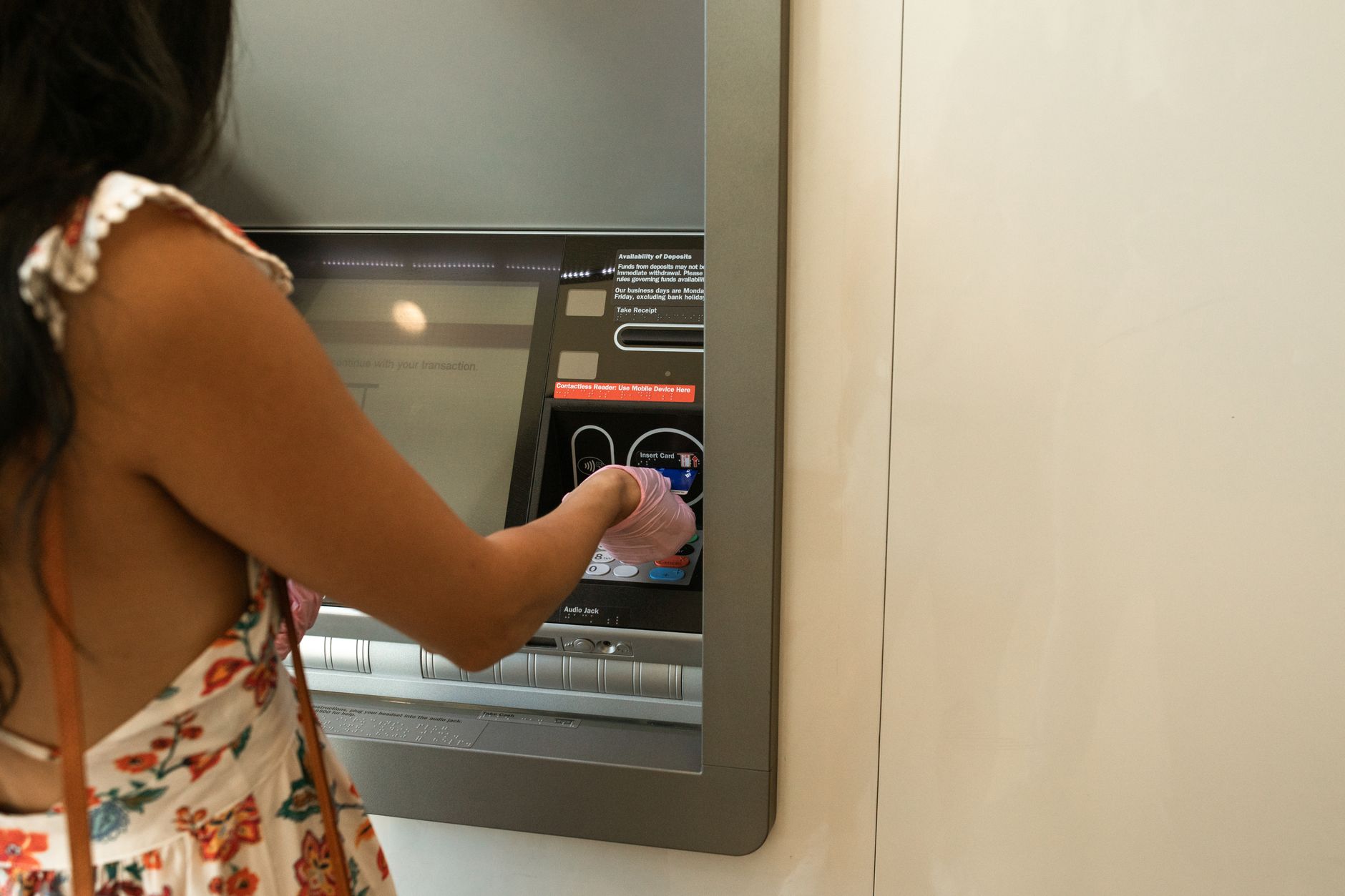
Photo by RDNE Stock project on Pexels
The Final Score & Who Should Pick What?
The best online gambling choice is not the operator with the largest advertised bonus; it is the legally available product whose rules, probability, payment process, and personal risk level are understood in advance. Casino players should prioritise RTP transparency and limits, poker players should examine rake and table liquidity, lottery buyers should accept extremely low top-prize probabilities, and sports bettors should compare prices rather than follow confidence. Readers using Match Daily should treat FIFA World Cup analysis as context for informed thinking, never as a promise of a winning bet.
My evidence-based ranking is therefore conditional:
- For mathematical transparency: compare RTP, house edge, volatility, and game rules.
- For sports analysis: compare implied probability, overround, line movement, injuries, tactics, and settlement rules.
- For operational reliability: verify the licence, payment ownership, withdrawal timetable, and complaints route.
- For personal safety: set limits first, avoid chasing losses, and use self-exclusion when control weakens.
- For promotional value: calculate net expected value after wagering, expiry, contribution, and maximum-bet conditions.
The contrarian conclusion is that a smaller bonus can be superior to a larger one. A $50 promotion with transparent terms, a 10-times wagering requirement, no unreasonable expiry, and a familiar payment route may have greater usable value than a $1,000 promotion requiring 50-times wagering on restricted games. In expected-value terms, clarity reduces estimation error; that advantage is often omitted from promotional comparisons.
Online gambling also has a legal boundary that cannot be solved by technology. A virtual private network may change what a website sees, but it does not necessarily make gambling lawful, satisfy identity requirements, or protect withdrawals. The expected value of avoiding an unlawful account is effectively the value of preventing confiscation, penalties, payment failure, and personal-data exposure.
Before making any decision, use the [Internal Link: responsible gambling and self-exclusion resources] and check the regulator serving your location. For football fans, Match Daily can support a disciplined research process by separating team information from betting certainty and by keeping player statistics in their proper evidential context.

Photo by Franco Monsalvo on Pexels
In short, online gambling should be approached as a regulated, high-variance financial activity rather than effortless entertainment. Compare the mathematics, test the operator’s legal identity, understand the payment timetable, and decide the loss limit before the first wager; if those steps feel inconvenient, that is a reasonable signal not to deposit.
Would you like to explore Match Daily’s 2026 FIFA World Cup coverage before drawing your own conclusions?
Frequently Asked Questions
Q: What is online gambling?
A: Online gambling is wagering money or something of value through an internet-connected website or application. It includes online casinos, poker, sports betting, bingo, lotteries, and esports markets, although the exact legal definition varies by jurisdiction. A platform’s legality depends on location, product type, age rules, and authorisation from a relevant regulator such as the United Kingdom Gambling Commission or Malta Gaming Authority. Always confirm the local rule before registering or depositing.
Q: How do I get started with online gambling safely?
A: Start by confirming that the activity is legal where you live and that the operator has a verifiable local licence. Then read withdrawal, bonus, identity-check, and settlement terms; set deposit and loss limits; use only an account and payment method in your own name; and deposit only an affordable amount. A small initial transaction can test the payment route, but it cannot guarantee future withdrawal performance. Do not use borrowed money, essential household funds, or credit intended for bills.
Q: What is the difference between casino RTP and sports-betting odds?
A: Casino RTP is a long-run theoretical return percentage, whereas sports-betting odds price a particular event and imply a probability. A slot with 96% RTP theoretically returns $96 per $100 wagered over a very large number of plays, while decimal odds of 2.00 imply a 50% break-even probability before bookmaker margin. Neither figure predicts an individual result. Sports bettors must also account for overround, price movement, void rules, and the accuracy of their probability estimate.
Q: Is online gambling worth it for FIFA World Cup betting?
A: FIFA World Cup betting is worth considering only as paid entertainment after legality, price, and personal limits have been assessed; football knowledge does not remove bookmaker margin. Match Daily can provide team tactics, player statistics, and tournament context, but its content is not a guarantee or financial recommendation. Compare implied probabilities with your own cautious estimate, account for injuries and line-ups, and avoid increasing stakes because a prediction feels confident. A no-bet decision can have the highest expected value when the price is poor.
Q: How much does it cost to play online gambling games?
A: The direct cost can range from a minimum deposit of a few dollars to any amount allowed by the operator, but the expected cost depends on stake size, house edge, turnover, fees, and bonus conditions. For example, $1,000 of casino turnover at a 4% theoretical house edge implies an average mathematical loss of about $40 over many comparable trials, not a guaranteed individual loss. Payment conversion charges and withdrawal fees can add cost. Set a fixed budget before play and never treat winnings as required income.
Q: Why is my online gambling withdrawal delayed?
A: Withdrawals are commonly delayed by identity verification, payment-method ownership checks, manual fraud screening, bank processing, weekends, or incomplete account information. Stop sending repeated withdrawal requests, save the transaction ID, review the operator’s published timetable, and contact official support in writing. If the response exceeds the stated period, request the precise reason and escalation route. Do not pay an unofficial person an extra “release fee,” and contact the relevant regulator or dispute service if the operator does not resolve the matter.
Q: What should I do if online gambling is becoming difficult to control?
A: Stop depositing and use the operator’s cooling-off, deposit-limit, or self-exclusion tools immediately. Remove saved payment methods, block gambling marketing, tell a trusted person, and contact a recognised support organisation such as the National Council on Problem Gambling in the United States or an equivalent service in your country. Chasing losses increases exposure rather than improving expected value. If gambling is affecting safety, housing, relationships, or mental health, seek professional help urgently through local health or emergency services.